Calmer walks, even when treats stop working.
Barking at other dogs, ignoring you outside, spitting out treats the second you leave the house? LeashJoy finds the distance where your dog can still think, then closes it, ten minutes a day.
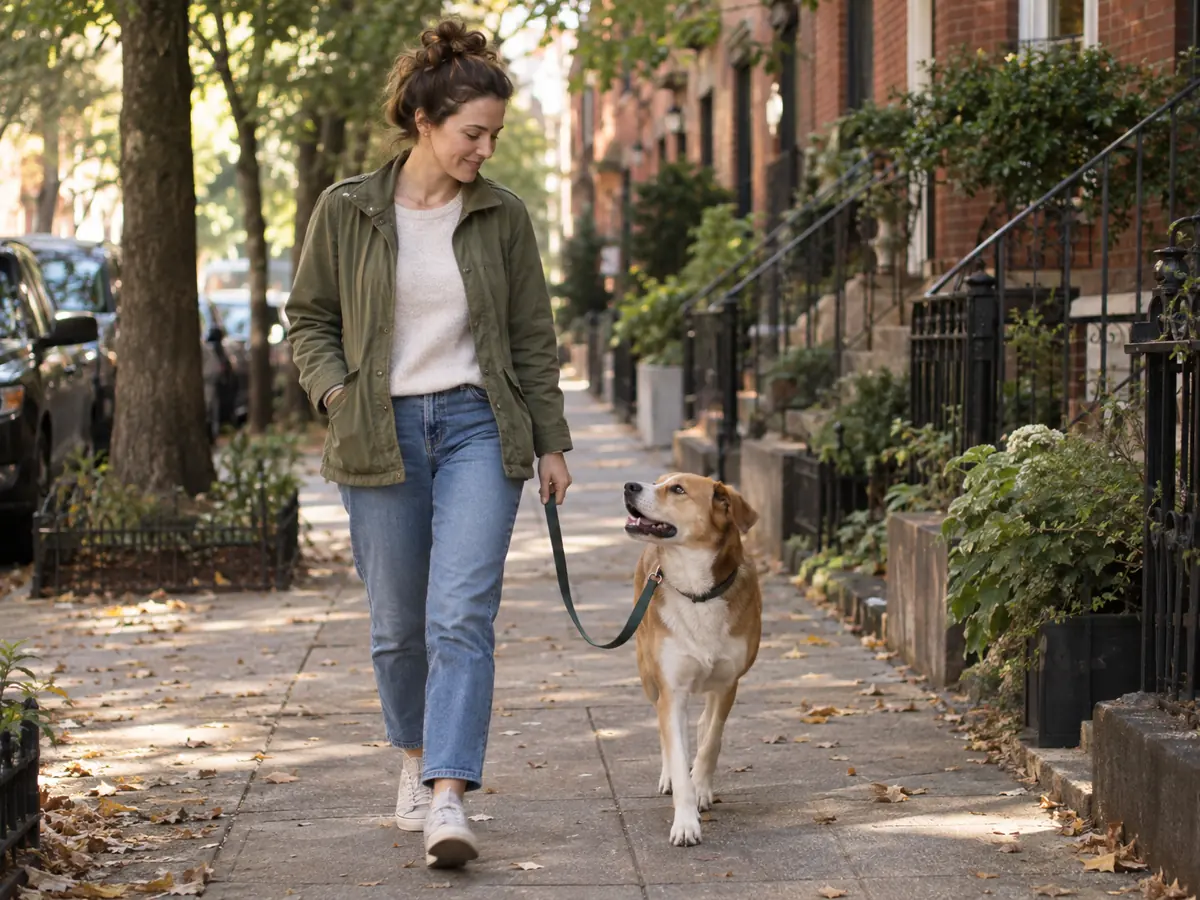
Sound familiar?
We read about 1,300 comments from dog owners under popular dog-training videos. “My dog won't take treats or listen once we're outside” drew 70% of all the likes on owners' questions. If that's you, you're in very good company, and it's exactly where LeashJoy starts.
It isn't stubbornness. It's distance.
Every dog has a point where the world goes from interesting to too much. Trainers call it threshold. Past it, a dog can't eat, can't listen and can't learn. Most walks push dogs past it again and again, so every walk rehearses the reaction.
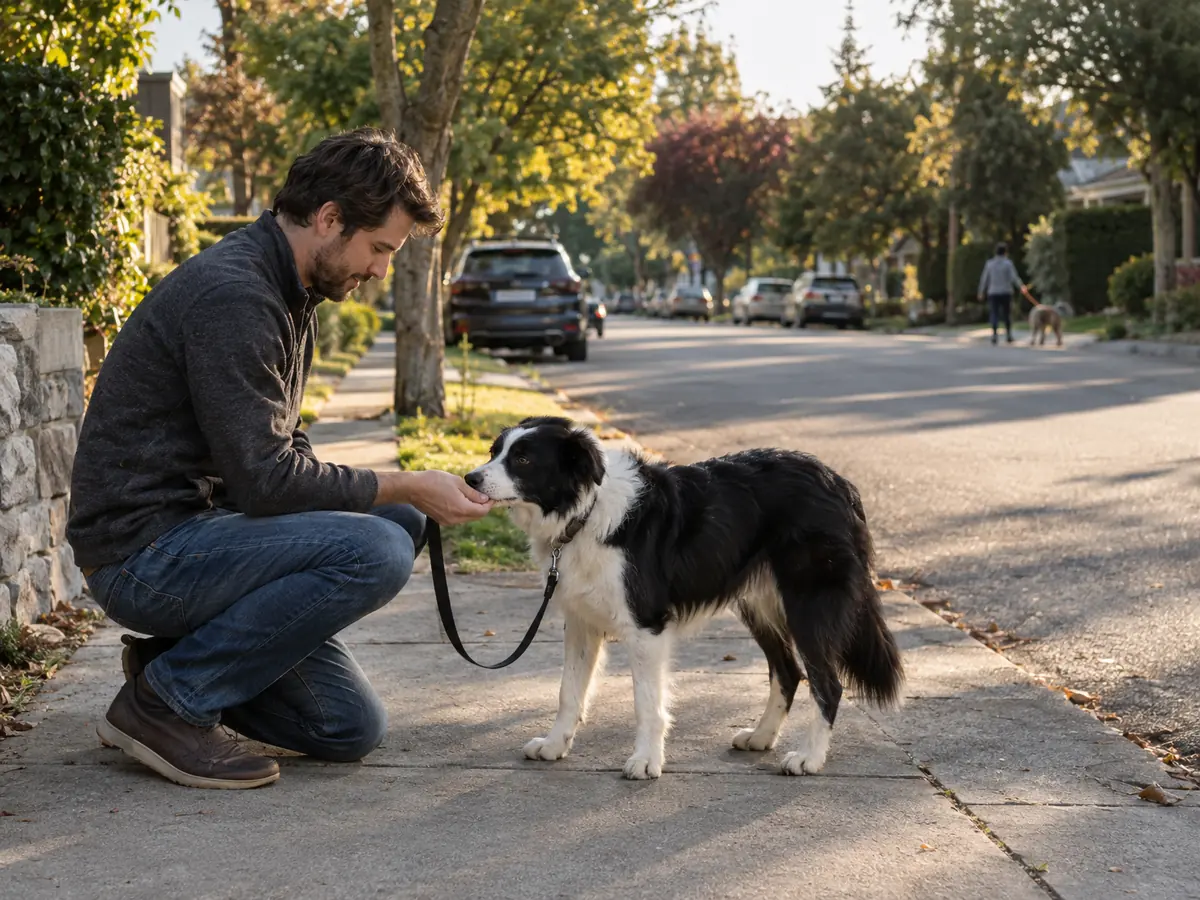
LeashJoy works in the middle zone and makes it creep closer, week by week.
How LeashJoy works
Two-minute quiz
Tell us what walks look like. You get a plain-words diagnosis and the distance to start at.
Ten minutes a day
One short exercise a day, with exactly what to do, what success looks like, and what to do when it goes wrong.
Log it in three taps
How close it got, how your dog did, whether they ate. Your plan adjusts, and you watch the distance shrink.
“Look at that”
Instead of hoping your dog won't notice other dogs, you pay for noticing calmly. Calm looks become a habit.
- Set up at about 45 ft from where other dogs pass.
- The moment your dog looks at another dog, say “yes” and give a treat. Every look, every time.
- Keep it short: about ten looks, then a “find it” and walk away.
If it's hard: if your dog stares hard or stops eating, you're too close. Add 15 ft and try again tomorrow.
Start free. Keep going if it helps.
Free
- The 2-minute quiz
- Your dog's diagnosis and starting distance
- Week 1: seven daily exercises
- Walk log and progress chart
The full program
- All six weeks: 42 daily exercises for your track
- A working distance that adjusts from your logs
- Setups, pass-bys and real-walk plans for weeks 4–6
- Not helping? Email us within 14 days for a full refund
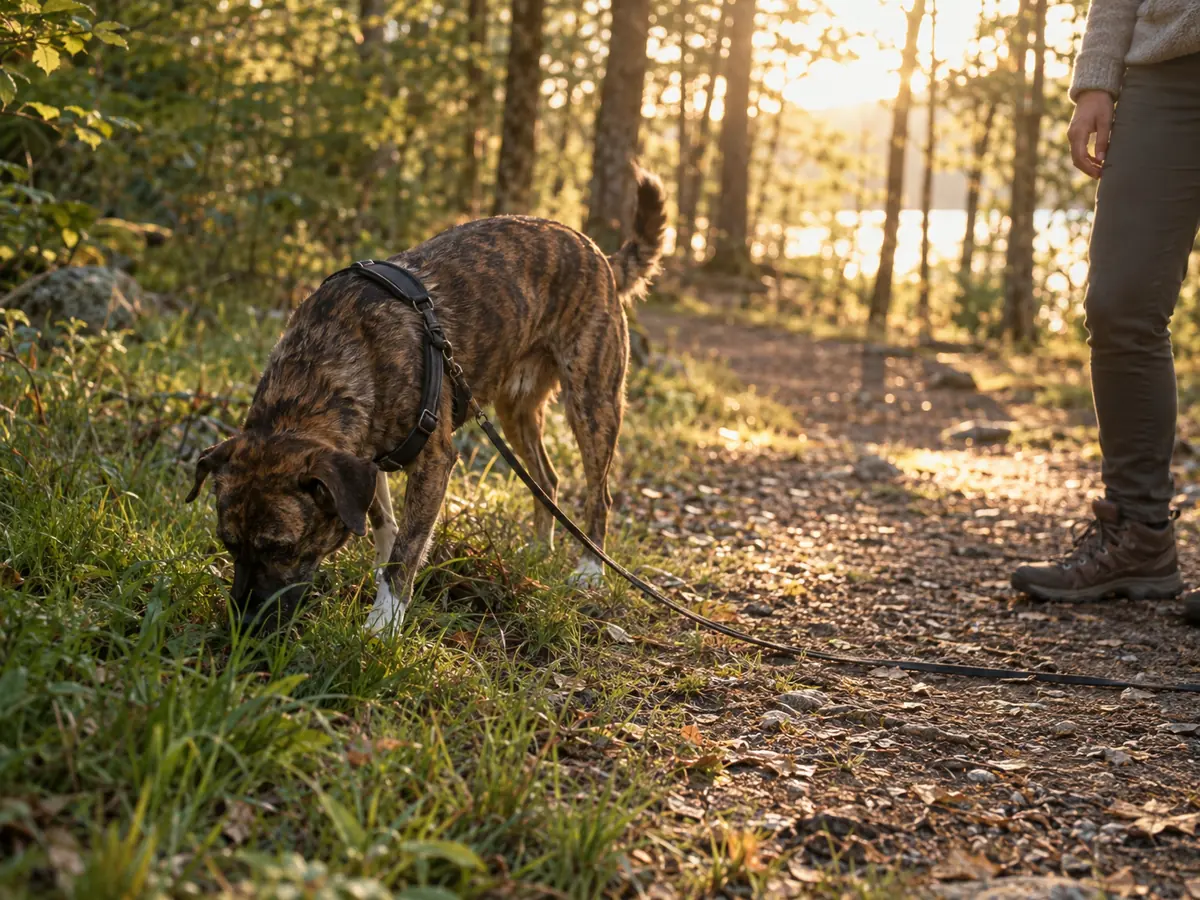
Kind methods only
Distance, rewards, sniffing and good timing. No prong, choke or shock collars, no leash pops, no yelling.
Honest about limits
If your dog has bitten, or fear appeared suddenly, we'll tell you to bring in a certified behaviorist or your vet.
Made for real life
Ten minutes a day, built for busy streets, small apartments and the dog you actually have.
Free guides
Short and practical. Read one before tonight's walk.
Questions
What if my dog isn't food motivated?
Most dogs who "aren't food motivated" outside are simply too stressed to eat. Stress switches appetite off. The program starts by finding the distance where your dog can eat again, and it also uses sniffing and moving away as rewards.
Is it for reactive dogs, pullers, or both?
Both, plus dogs who tune out outside. The quiz puts you on one of three tracks (calm at a distance, loose-leash walking, or focus outside), and every day's exercise fits that track.
How long does it take?
Ten minutes a day for six weeks. Most owners see the distance their dog can cope with shrink within the first two or three weeks. Bad days happen and are built in.
Does it work for rescue dogs?
Yes. Many rescue dogs struggle on walks because the world was never safe for them. Going slowly at the right distance is exactly what they need.
Do I need special gear?
A comfortable harness and a regular leash are enough. A 15–30 ft long line helps for decompression walks. No prong, choke or shock collars. We don't use them.
My dog has bitten. Is this right for us?
Use LeashJoy alongside a certified behavior consultant (IAABC or CCPDT) or a veterinary behaviorist, not instead of one. The quiz will tell you this too.